arrest-org-com operates the United States’ largest publicly available arrest repository, holding more than two million booking records from every county jail in all fifty states. The site lets users search by name, date of birth or booking number and instantly view charge descriptions, arrest dates, bond amounts and the arresting agency. Records refresh every four hours through direct pulls from sheriff‑office APIs and court clerk feeds, so the data mirrors the latest filings. Advanced filters for gender, age range and offense type let law‑enforcement staff, journalists and investigators narrow results, while high‑resolution photographs provide clear visual identification.
How arrest-org-com Works
arrest-org-com collects real-time data from official law enforcement sources across the country. Each record comes directly from sheriff offices, county jails, and court systems. The platform uses secure API connections to pull updated information multiple times per day. This ensures users see the most current arrest details available. Searches can be done by full name, date of birth, or unique booking number. Results show mugshots, charges, arrest locations, and bond status. The system also flags repeat offenders, drug-related crimes, and firearm violations for quick reference.
National Coverage and Data Accuracy
arrest-org-com covers all 50 states with over 3,000 local jurisdictions. Every county jail contributes data through automated feeds. The site updates records every four hours, matching the pace of official government systems. Users can trust the information because it comes straight from verified sources like the Florida Department of Law Enforcement, Texas Department of Criminal Justice, and Virginia Department of Corrections. No third-party data brokers are involved. This direct sourcing reduces errors and keeps the database accurate.
Search Features and Filters
The search tool on arrest-org-com offers simple and advanced options. Basic searches use a name or booking number. Advanced filters let users narrow results by age, gender, offense type, or county. For example, someone can find all drug arrests in Harris County, Texas, or all felony assaults in Fulton County, Georgia. The system also supports date-range searches to track arrests over specific periods. High-resolution photos help with identification, and each entry links to related court dockets when available.
State-Specific Portals
arrest-org-com includes dedicated portals for individual states. Each state page pulls data from its own law enforcement networks. Florida’s section shows over 850,000 records from 67 county jails. Kentucky lists 300,000 entries updated nightly. Texas hosts the nation’s largest mugshot collection—1.2 million records—with cross-references to state laws. Mississippi, Virginia, Georgia, Arkansas, South Carolina, and Oklahoma also have full coverage. These portals follow state open-records laws and update multiple times daily.
Florida Arrests and Inmate Search
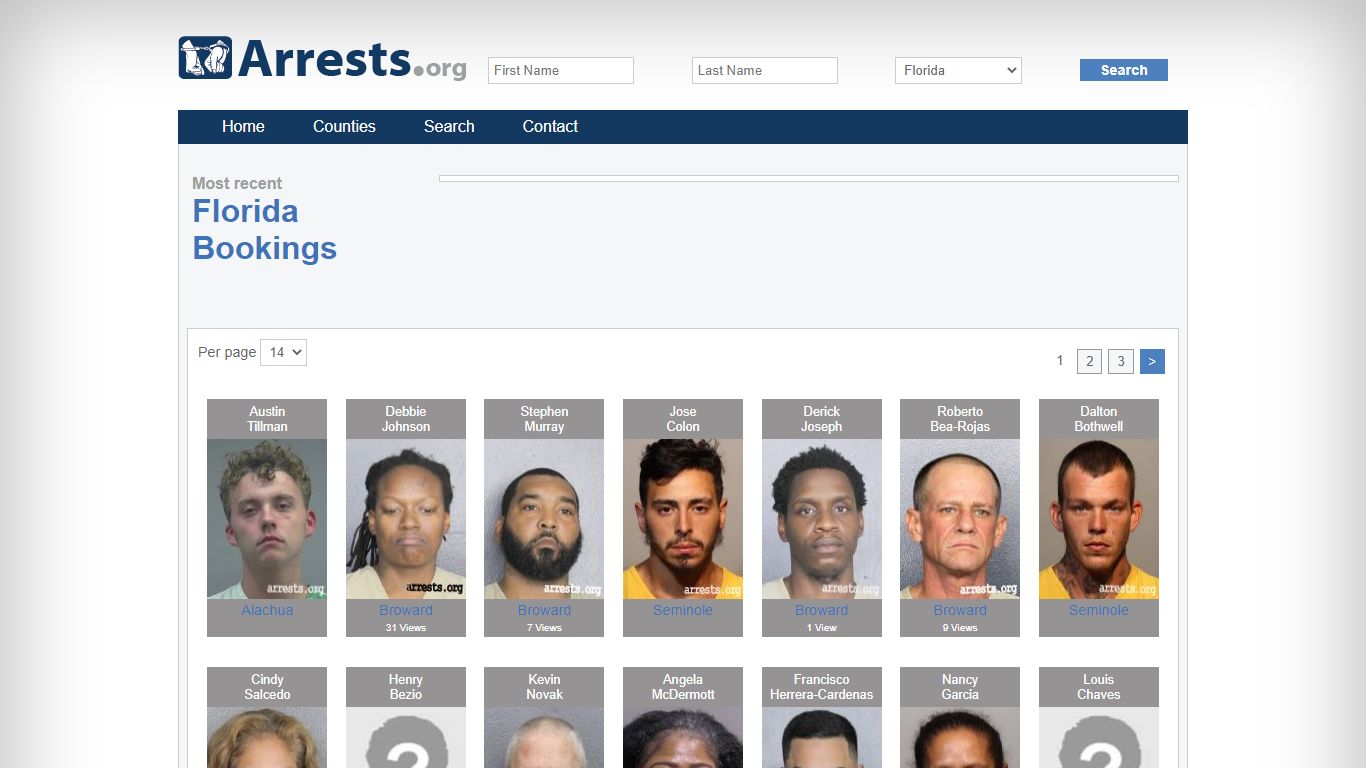
The Florida portal aggregates daily logs from all 67 county jails. It delivers more than 850,000 recent records with photos, charge classifications, and arresting agency details. Users can sort by county, charge severity, or booking date. Each entry links to the clerk-of-court docket for case follow-up. Probation violations, DUI incidents, and controlled-substance offenses are flagged with icons. Data comes from official FDLE feeds and complies with Florida privacy statutes.
Kentucky Arrests and Inmate Search
Kentucky’s section compiles over 300,000 arrest entries from every county sheriff’s office and court clerk. Each profile includes the alleged offense, arrest timestamp, booking photo, bond amount, and pending court dates. The site clearly states that individuals shown have not been convicted and remain innocent until proven guilty. Users can filter by charge type, age, or gender. Records from multi-agency task forces are highlighted. Data refreshes nightly from official Commonwealth sources.
Texas Arrests and Inmate Search
Texas hosts the nation’s largest mugshot database with over 1.2 million records. Each entry includes name, high-resolution photo, detailed charge list, arrest date, and bond amount. Users can narrow results by county—such as Harris, Dallas, or Travis. The system cross-references arrests with the Texas Public Information Act to ensure lawful access. Firearms, drug, and repeat offenses are flagged. Continuous sync with state law enforcement feeds keeps data current.
Mississippi Arrests and Inmate Search
Mississippi’s search tool covers all 82 counties with over 650,000 records. Each entry shows full name, age, booking photo, arrest location, charge description, and bail amount. Users can filter by drug offenses, traffic violations, or violent crimes. Clickable links connect to county court dockets. Data comes from the Mississippi Department of Public Safety and updates every six hours.
https://mississippi.arrests.org/
Virginia Arrests and Inmate Search
Virginia’s portal indexes over 750,000 arrest entries from 95 counties and independent cities. Each record includes a clear booking photo, age, gender, and precise charge codes. Users can search by name, zip code, or offense type. High-profile cases from Virginia Beach, Norfolk, and Richmond are highlighted with monthly trend summaries. Data comes from the Virginia Department of Corrections and local sheriff offices, refreshed daily.
Campbell County Arrests and Inmate Search
Campbell County in southwestern Virginia provides access to over 12,000 local arrest records. Entries list suspect name, arrest date, charge (like felony warrant or vandalism), bond amount, and high-definition mugshot. The system notes procedural outcomes such as failure to appear or release on recognizance. Results can be sorted by charge severity or booking time in 24-hour format. Data syncs with the Campbell County Clerk every two hours.
https://virginia.arrests.org/index.php?county=672
Marshall County Arrests and Inmate Search
Marshall County in Tennessee hosts over 45,000 arrest records from Lewisburg and surrounding areas. Each record shows detainee name, age, booking photo, exact charge (narcotics, assault, etc.), and bond status. The arresting agency is noted—sheriff, police, or state troopers—with a link to the criminal docket. Updates occur every three hours from Tennessee’s real-time safety feed. Users can filter by offense category or release status.
https://tennessee.arrests.org/index.php?county=147
Georgia Arrests and Inmate Search
Georgia’s statewide search covers over 950,000 records from the Department of Corrections, county jails, and city police. Each profile includes mugshot, full name, birthdate, arrest timestamp, and charge list with Georgia Code sections. Users can filter by county (Fulton, Cobb, DeKalb) or offense type. Repeat offenders and flight-risk individuals are tagged. Data refreshes every eight hours from GLEDS feeds.
Arkansas Arrests and Inmate Search
Arkansas provides a database of over 700,000 bookings from the Department of Public Safety, county sheriffs, and city police. Each entry contains photo, name, age, arrest date, and charges aligned with Arkansas Code. Users can filter by county (Pulaski, Benton, Washington) or crime category. Firearms and gang-related cases are highlighted. Data integrates four times daily from the Automated Criminal History System.
South Carolina Arrests and Inmate Search
South Carolina’s portal lists over 620,000 arrest records from the Department of Corrections, county sheriffs, and municipal police. Each profile offers booking image, name, date of birth, arrest date, and charges tied to state law. Users can refine by county (Charleston, Greenville, Richland) or offense type. Repeat offenders and felony weapons charges are flagged. Updates every six hours via the Public Safety Data Network.
https://southcarolina.arrests.org/
Oklahoma Arrests and Inmate Search
Oklahoma’s search aggregates over 560,000 records from the Department of Corrections, county sheriffs, and city police. Each entry includes high-definition mugshot, full name, age, arrest timestamp, and charge list referencing Oklahoma Statutes. Users can filter by county (Oklahoma, Tulsa, Cleveland) or category. Protective order violations, DUI arrests, and interstate warrants are highlighted. Data syncs with the Criminal History Retrieval System every five hours.
Legal Compliance and Privacy Standards
arrest-org-com follows strict legal guidelines to protect privacy and ensure compliance. All data comes from public records authorized for release under state laws like the Texas Public Information Act and Virginia Freedom of Information Act. Sealed or expunged cases are not displayed. The site includes disclaimers stating that arrests do not imply guilt. Users are reminded that individuals remain innocent until proven guilty in court. This commitment builds trust with law enforcement, journalists, and the public.
Who Uses arrest-org-com
Law enforcement agencies use the site to verify suspect histories and track cross-jurisdictional cases. Journalists rely on it for crime reporting and background checks. Private investigators access it for client research. Families may search to confirm a relative’s status. Researchers study crime trends using the filtered data. Each group benefits from fast, accurate, and legally compliant information.
Data Update Frequency and Reliability
arrest-org-com updates records multiple times per day—every four hours nationally, with some states refreshing nightly or every few hours. This frequency matches or exceeds government reporting standards. Direct API connections eliminate manual entry errors. Users can expect near real-time accuracy, especially in high-volume states like Texas and Florida. The system logs update timestamps so users know when data was last refreshed.
Mobile Accessibility and User Experience
The website works seamlessly on mobile devices. Searches load quickly, and photos display clearly on small screens. The interface uses simple menus and large buttons for easy navigation. No app download is required—everything runs in a web browser. This makes it accessible to users in the field, such as police officers or reporters covering breaking news.
Limitations and Responsible Use
While arrest-org-com provides valuable public data, it has limits. Not all arrests result in convictions. Some records may be incomplete due to delayed agency reporting. Users should verify critical information with official court documents. The site encourages responsible use and warns against misuse, such as harassment or discrimination based on arrest records alone.
Related Public Record Resources
For broader research, users can explore additional jail rosters and court databases. These include Hennepin County Jail Roster, Judicial Court CT, and PLPE Search. Each offers complementary data for background checks and legal investigations. Always cross-reference with official sources when making decisions based on arrest information.
Contact Information
For questions about data accuracy or technical support, contact the team behind arrest-org-com. While no public phone number is listed, users can reach out through official state portals linked on the site. Visiting hours and office locations vary by jurisdiction. Always check the specific county or state page for local contact details.
Official website: https://arrests.org/
Frequently Asked Questions
Many users have common questions about how arrest-org-com works, what data is included, and how to interpret results. Below are detailed answers to help clarify key points and ensure safe, effective use of the platform.
Is the information on arrest-org-com up to date?
Yes, arrest-org-com updates its records every four hours by pulling data directly from sheriff offices, county jails, and court clerk systems. Some states refresh even more frequently—Florida and Texas update multiple times daily. This ensures users see the latest arrest filings almost in real time. Each record shows a timestamp indicating when it was last updated. Because the site uses direct API feeds instead of manual uploads, there is minimal delay between official booking and online availability. Users can trust the data reflects current jail rosters and court dockets.
Can I remove my name from arrest-org-com?
arrest-org-com does not control the data—it only displays public records released by government agencies. If your arrest record has been expunged or sealed by a court, you must contact the original arresting agency or court clerk to request removal from their system. Once the official source deletes the record, it will no longer appear on arrest-org-com during the next data sync. The site complies with all state laws regarding record removal and does not host private or non-public information.
Are mugshots on arrest-org-com legally allowed?
Yes, mugshots are considered public records in most U.S. states and are legally published by arrest-org-com. These photos are taken during the booking process and are released under state open-records laws like the Texas Public Information Act and Virginia Freedom of Information Act. The site includes disclaimers reminding users that an arrest does not mean guilt. High-resolution images help with identification but are not used for commercial purposes.
How accurate are the charge descriptions?
Charge descriptions on arrest-org-com come directly from official law enforcement reports and court filings. Each entry lists specific statutes, code sections, and offense classifications as provided by the arresting agency. However, charges can change during court proceedings—what appears as a felony at booking might be reduced later. Users should follow the provided links to court dockets for the most current legal status.
Can I use arrest-org-com for employment background checks?
While the data is public, using arrest records for employment decisions may violate federal and state laws. The Fair Credit Reporting Act (FCRA) restricts how arrest information can be used in hiring. Employers should not rely solely on arrest-org-com for background checks. Always consult legal counsel and use certified background screening services that comply with FCRA guidelines.
Why are some counties missing data?
Most U.S. counties contribute data to arrest-org-com, but a few may have technical delays or opt out of public sharing due to local policies. In rare cases, rural jurisdictions lack digital reporting systems, causing gaps. The site works continuously to onboard new sources and improve coverage. Users can check the update log or contact the specific county sheriff’s office for clarification.
Does arrest-org-com show release dates?
Release dates are included when available from the source agency. Some records show “released on recognizance,” “bond posted,” or “transferred to state prison.” However, not all jails report release information immediately. For the most accurate status, users should check the linked court docket or contact the county jail directly.